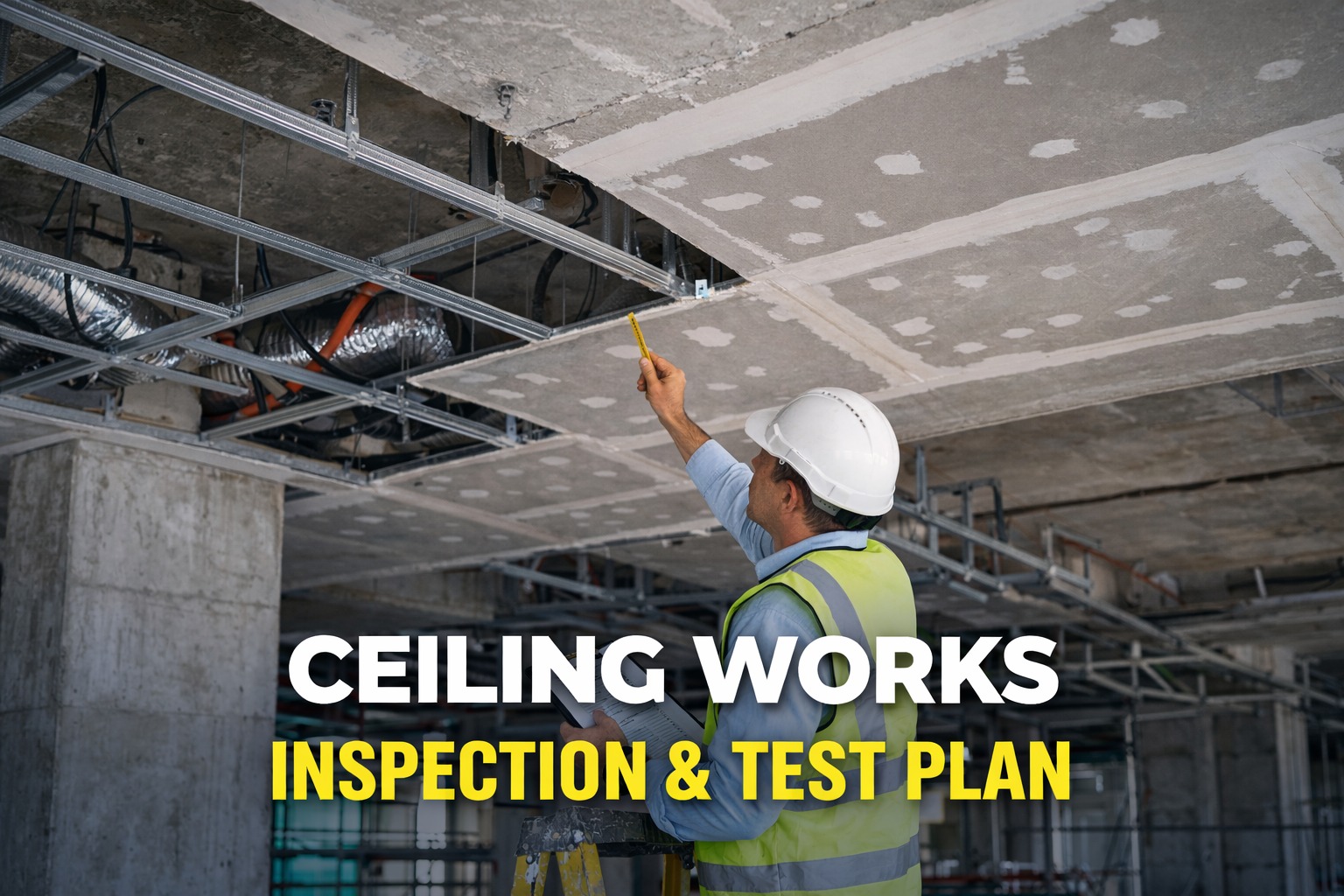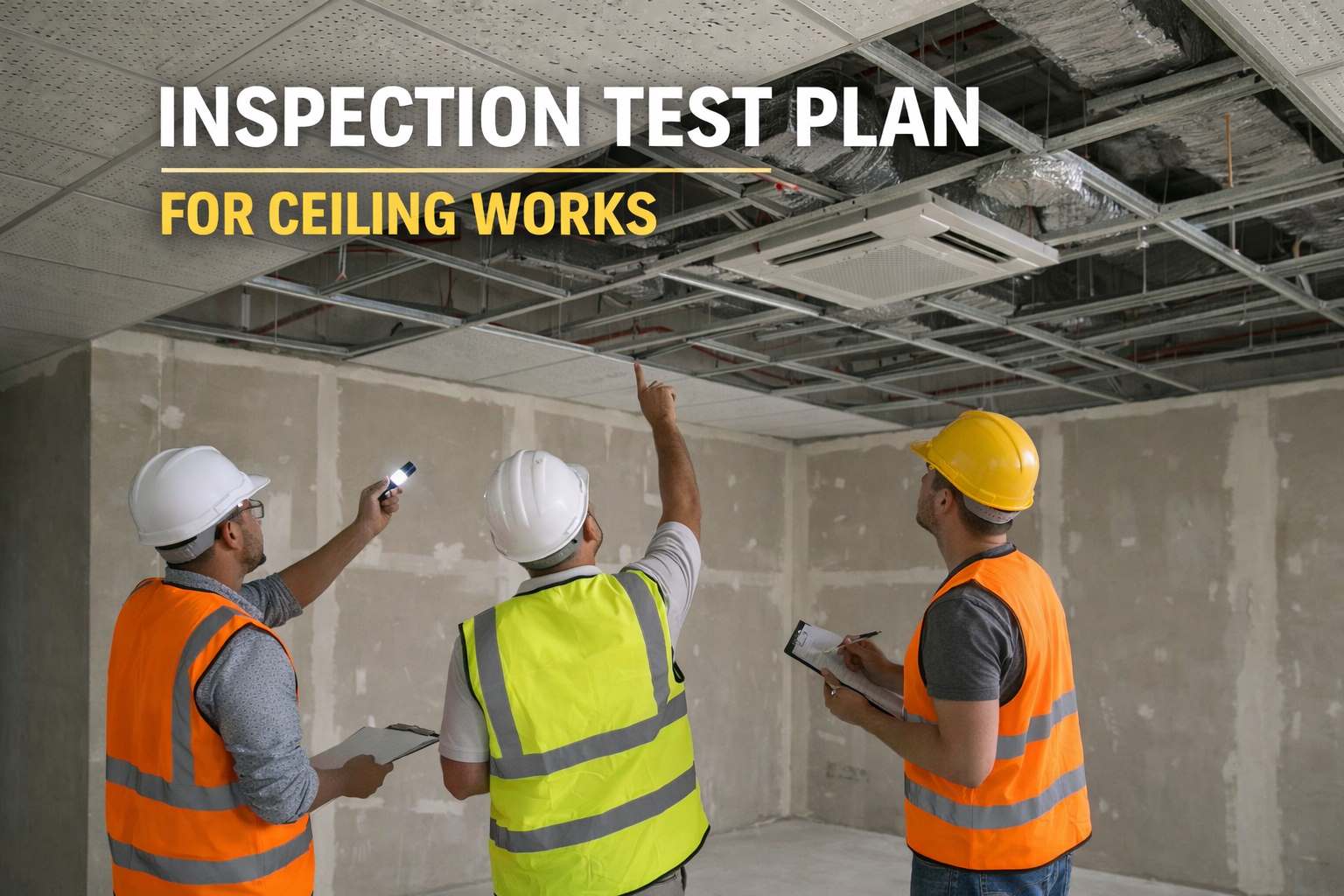
A Grid & Tile Ceiling System is one of the most widely used false ceiling solutions in commercial and residential projects. Its clean finish, ease of service access, acoustic performance, and cost-effectiveness make it an ideal choice for offices, lobbies, retail interiors, and many other applications. This post Inspection test plan for Ceiling Works – Grid & Tile System explains the inspection process at different stages of the activity to achieve acceptable quality for ceiling works using grid and tile systems.
WHAT IS AN INSPECTION AND TEST PLAN (ITP)
Inspection and Test Plans and checklists are integral parts of quality management systems — not only in construction but in almost every industry where Quality Management Systems (QMS) are implemented.
They are considered master documents through which various parameters and activities of a process are monitored and recorded. These records later play a vital role during verification and auditing.
In construction, where numerous trades and activities must be completed — such as structural, finishes, façade, electrical, mechanical, and plumbing works — preparation and implementation of different ITPs form a crucial part of the project quality management system.
To read more about ITPs and how to prepare one, CLICK HERE and refer to the last picture in this post for a quick understanding of an ITP’s structure and how to align it with your project requirements.

INSPECTION AND TEST PLAN FOR FALSE CEILING WORKS
SECTION 1 – DOCUMENTATION REVIEW
This section outlines the review and approval process for all necessary documents before commencing False Ceiling works on-site.
Key documents include:
- Approved drawings and typical details
- Material submittals,
- Sample approval
- Method Statement
SECTION 2 – INSPECTION OF INCOMING MATERIALS & STORAGE
This section addresses the inspection of materials used upon delivery.
- Ceiling sections,
- Perimeter and intermediate channels,
- Ceiling angles, connecting clips & soffit cleat.
- Anchor fasteners, screws, nut,s bolts, and washers, etc
- Gypsum plaster boards
- Finishing materials
- Storage of materials
- Primers and paint
SECTION 3 – PRE-WORK INSPECTION
This section focuses on inspections to be carried out before the ceiling work begins to ensure all prerequisites are met
Checks include:
- Check for clearance of the area
- Check for painting in the false ceiling area
- Check for Coordination with other trades
- Check on materials
- Check on the setting out of levels
SECTION 4 – WORK IN PROGRESS INSPECTION
During ceiling work in progress, regular inspections are conducted to ensure that the work meets acceptable quality standards.
Checks typically include:
- Check on the fixing of wall angles
- Check on suspension rod brackets
- Check on the main runner fixing
- Check for cross tee runners
- Check on the fixing of wall angles
- Check on suspension rod brackets
- Check on the main runner fixing
- Check for cross tee runners
These inspections help prevent defects and ensure that ceiling work meets required standards
SECTION 5 – POST-WORK INSPECTION
After work is completed, an inspection ensures that the finished work/area for
Checks include:
- Check ceiling Installation
- Cleaning /touch-up
Ceiling Works – Grid & Tile System, when executed using the correct procedure and strict quality control, ensures a durable, visually appealing and functionally efficient false ceiling. Proper inspection and coordination with other services are key to achieving a perfect finish and long-term performance.
Click here to understand what an ITP is and prepare one
Sign up below to download the full customizable Inspection and Test Plan (ITP) for Ceiling Works – Grid & Tile System and checklist in Word format.
Refer to this picture to learn tips on how to customize the ITP depending on Project Requirements